

Linocuts
What is a linocut? How a handmade linocut is created
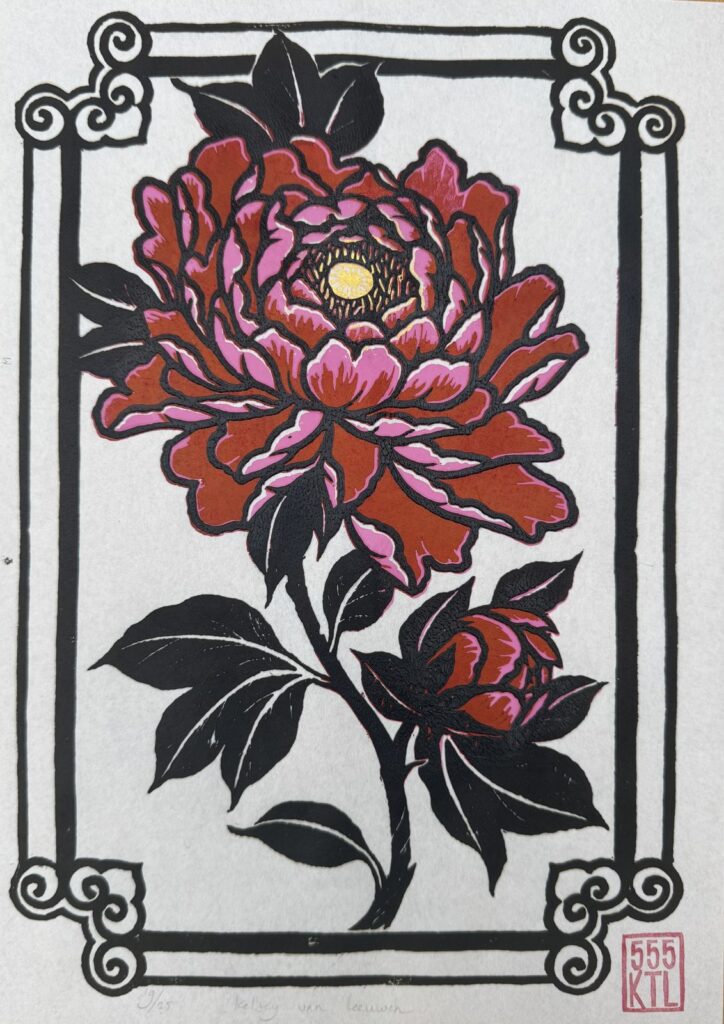
Nov
A linoprint, also known as a linocut, is a print made from a carved linoleum plate. Everything you cut away remains white; everything that remains absorbs ink and is printed. Because each plate is carved, inked and printed by hand, no two prints are exactly the same. This is what makes a linoprint different from a poster or a digital print.
How is a linocut made?
1. The design
It starts with a drawing. This is transferred to the linoleum plate in mirror image, because the image is reversed during printing.
2. Cutting
Using gouges – small chisels with a V- or U-shaped blade – you cut away everything that is to remain white. This is the most labour-intensive part of the process. You cannot correct a mistake: once it’s gone, it’s gone.
3. Inking
Printing ink is rolled thinly and evenly over the plate using a roller. Only the raised areas pick up ink.
4. Printing
The paper is placed on the plate and pressed down, either using a press or by hand with a squeegee. The sheet is then carefully removed from the plate and laid out to dry.
Why is no two prints the same?
The amount of ink on the roller, the pressure applied and how the paper reacts vary from sheet to sheet. As a result, the coverage varies slightly: here a slightly lighter patch, there a subtle texture in the ink. In hand-printed work, this is part of the print’s character.
Multiple colours
For a multi-colour print, each colour is printed separately. This can be done using separate plates for each colour, or using the reduction method: one plate is further carved away after each colour. The latter method means that the print run is fixed, as the plate no longer exists in its original form after the final colour has been printed.
What does ‘limited edition’ mean?
With a limited edition, only a limited number of prints are produced of a particular design. The print often bears a number, such as 3/20: the third of twenty. Once the edition is sold out, that design is no longer printed.
From tattoo to linocut
Kelsey is a tattoo artist and also creates linocuts. Her prints share the same visual language as her tattoos: Japanese and Eastern motifs, flowers, ornaments and bold outlines. Read, for example, about the the significance of the tiger and the dragon.
Making a linocut
- Frame it behind glass, preferably with a mat so that the print doesn’t touch the glass.
- Do not hang it in direct sunlight; even printing ink fades over time.
- Hold the paper by the edges, using dry, clean hands.
Frequently Asked Questions
What is the difference between a linocut and a poster?
A poster is a mechanically produced copy. A linocut is carved and printed by hand, in a limited edition, and each copy is slightly different.
Is a linocut the same as a woodcut?
The principle is the same, except that with a woodcut, the image is carved into wood, whereas with a linocut, it is carved into linoleum.
Does a linocut fade?
It won’t fade quickly, provided you hang it out of direct sunlight.
Take a look at Kelsey’s linocuts in the shop. If you spend €50 or more, you’ll receive a free mini print.