

Tattoo knowledge
Fine-line tattoos: how long do they stay looking good?
Nov
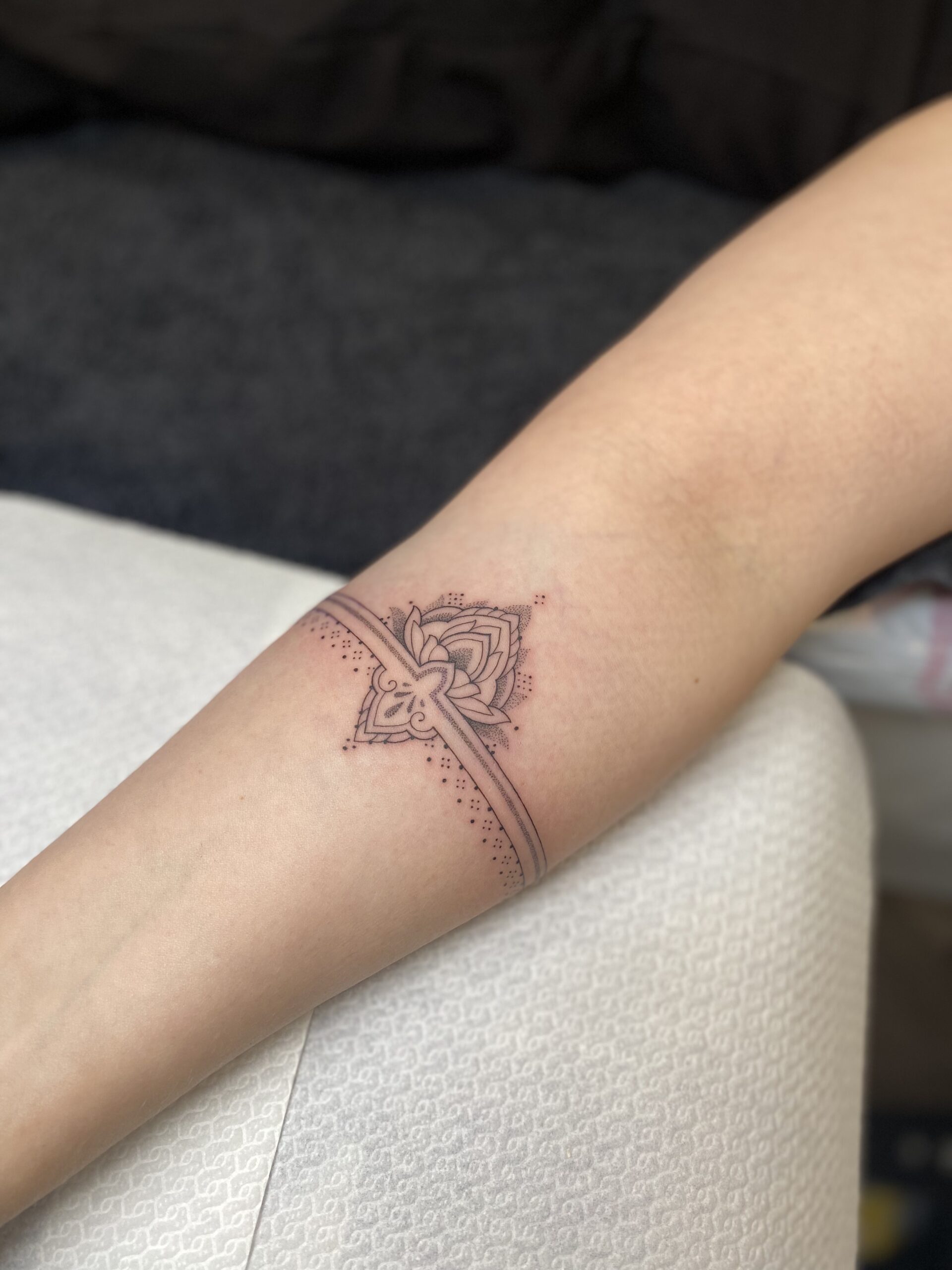
A well-executed fine-line tattoo will look good for years, but it’s less forgiving than a tattoo with thick lines and lots of black. Whether your lines will still look crisp in ten years’ time depends mainly on three things: the design, the spot on your body, and how you look after it and keep it out of the sun.
Why do fine lines fade differently?
The ink is deposited in the dermis, the layer beneath the epidermis. Over the years, your body breaks down a small proportion of that ink, and the ink that remains shifts very slowly by a fraction. With a thick line, you can hardly see this. With a line just a few tenths of a millimetre wide, the same shift is relatively significant: the line becomes slightly softer and lighter.
That’s not the tattoo artist’s fault; it’s just how skin works. The difference between a fine-line tattoo that ages well and one that looks blurred after a few years lies mainly in the choices made beforehand.
What determines how long a fine-line tattoo stays sharp?
Space in the design
Lines that are very close together tend to run into one another over the years. Small letters, minute details and lines just a millimetre apart are the first things to become indistinguishable. That is why Kelsey adjusts the size of a design to suit the level of detail: if you want a lot of detail, the design must be large enough to maintain space between the lines.
The spot on your body
Areas that move a lot, are subject to friction or are washed frequently wear out more quickly. Fingers, palms, the sides of your hands and your feet are the best-known examples. The inside of your forearm, your upper arm, shoulder, back and thigh, on the other hand, are areas where fine line work generally lasts well.
The depth and the tattoo artist’s touch
Ink that has been applied too shallowly will fade slightly as it heals. Ink that has been applied too deeply may bleed under the skin, which appears as a bluish haze along the line. Fine-line work requires a steady, consistent hand, precisely because there is little margin for error with thin lines.
Sun
UV light breaks down ink. This applies to all tattoos, but it’s more noticeable with fine-line work. A healed tattoo that you consistently apply high-factor sun cream to will remain vibrant for noticeably longer than one that’s left unprotected in the sun every summer.
What can you do yourself?
- Follow the aftercare instructions carefully: do not scratch, do not pick at scabs and stay out of the sun for the first few weeks. Read the aftercare tips.
- Apply sun cream to a healed tattoo if it is going to be exposed to the sun.
- Work with Kelsey to choose a size that suits the level of detail you want.
- Keep dry, flaky skin supple with an unscented cream.
Is a touch-up needed?
Sometimes, the skin absorbs less ink in a few areas whilst healing. In such cases, a minor touch-up may be advisable once the tattoo has fully healed. This is normal and says nothing about the quality of the work. A fine-line tattoo can also be refreshed after several years, but a well-designed piece won’t need this for a long time.
Frequently Asked Questions
Does a fine-line tattoo fade within a few years?
Not if the design has enough space, is in a suitable spot and you keep it out of the sun. The lines do fade slightly over the years; that’s true of every tattoo.
Which areas are less suitable for fine line treatment?
Fingers, hands and feet wear out the quickest due to friction and washing. Areas where the skin is stretched a lot, such as elbows and knees, are also more prone to wear and tear.
Can a fine-line tattoo be very small?
It can be small, but the smaller it is, the less detail it can accommodate. Kelsey advises on the appropriate size for each design to ensure it remains legible.
See examples on the page Fine Line Tattoo in Zaandam.
Fancy having a tattoo designed by Kelsey? Tell us about your idea, the location and the size in the application form. Kelsey attends sessions during the day and replies by email.